
Whole-home vs. managed loads
Some homes can run nearly everything on generator power; others work best with a managed approach that prioritizes essentials and avoids overload during startup.
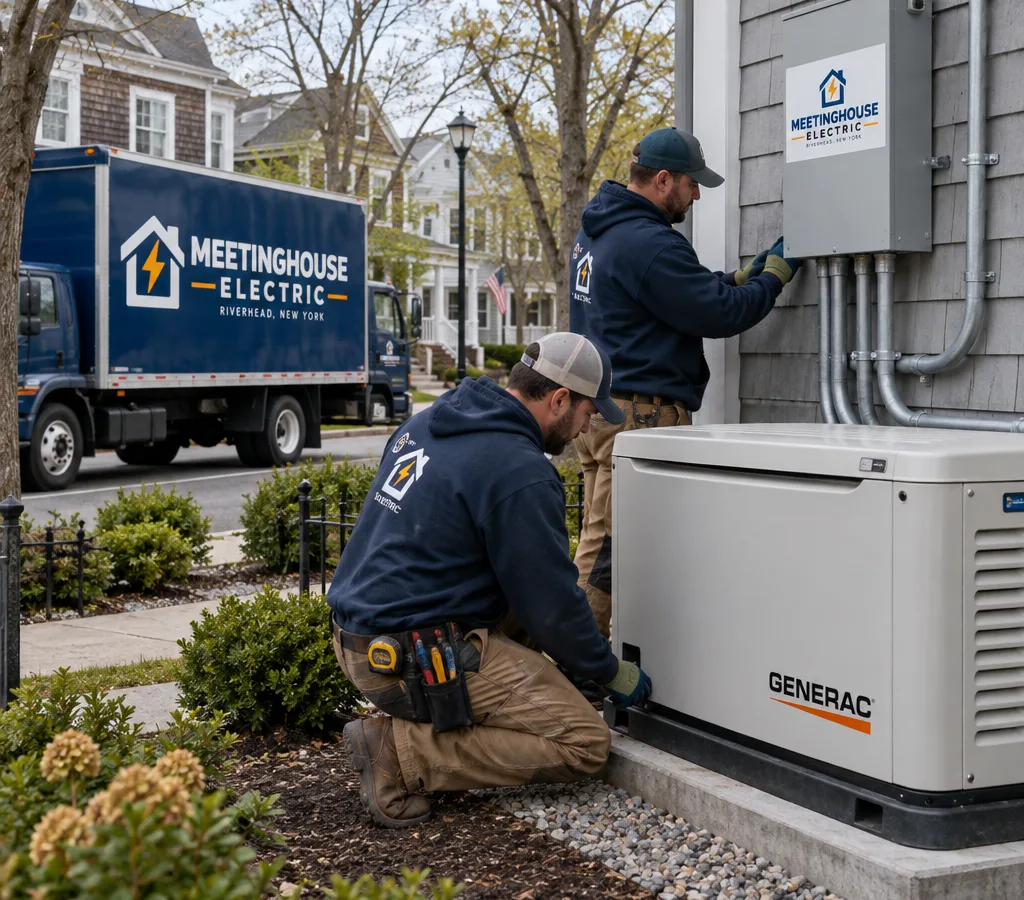
Generator installation · Suffolk County & Riverhead
Get a backup power system that starts when it should, carries the loads you expect, and meets local electrical and permitting requirements in Riverhead and across Suffolk County.
Call Now +1 631 641 8012Backup power planning
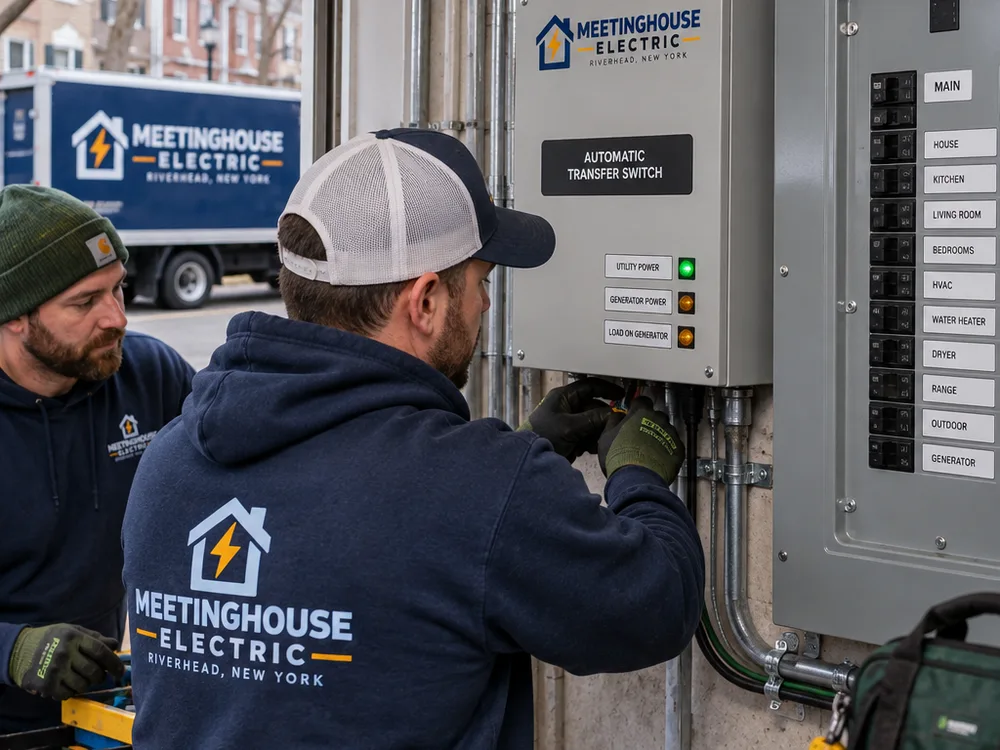
When you're searching for Suffolk County generator installation, you're usually trying to solve one problem: keep your home running through outages without risky extension cords or guesswork. Meetinghouse Electric installs standby generators and the electrical equipment that makes them work safely, including the automatic transfer switch (ATS), generator feeder wiring, grounding and bonding, and a clear load plan.
We approach every backup power job as an electrical project first: proper sizing, correct transfer equipment, and clean, code-compliant workmanship. If you also need a broader electrical plan around panels, service upgrades, or troubleshooting, our electrical service team handle that work with the same focus on safety and clear communication.
Installation scope
A reliable generator setup is more than setting a unit on a pad. A typical generator installation Suffolk County homeowners request includes:
Suffolk County homes vary widely in age and electrical layouts. In Riverhead and nearby hamlets, it's common to see older panel configurations and later additions. That's why we verify the existing service equipment and panel condition before we lock in the generator plan.
Planning decisions
Some homes can run nearly everything on generator power; others work best with a managed approach that prioritizes essentials and avoids overload during startup.
Transfer switch placement affects installation complexity and appearance. We plan the conduit path, penetrations, and equipment location for accessibility and clean workmanship.
Panel space, breaker condition, and service size can limit options. We check for safe tie-in points and code-compliant ways to integrate the transfer equipment.
A permitted install helps protect your home and keeps the project aligned with local requirements. We'll tell you what approvals are typically needed and what the inspector will look for.
Placement should consider neighbors, service access, and a clear path for future maintenance without moving equipment or landscaping.
Serving Suffolk County
Explore our local electrician services across Suffolk County.
Residential and commercial electrical service throughout Suffolk County.
Electrical repairs, upgrades, troubleshooting, and installations in Riverhead.
Dependable electrical work for homes and businesses in Hampton Bays.
Electrical repairs and installations for Southampton properties.
Wiring, panel, lighting, repair, and installation services in East Hampton.
Wiring, panel upgrades, lighting, and electrical troubleshooting in Manorville.
Installation process
We walk the property, look at the main panel and service equipment, and talk through what you want powered during an outage (heat, well pump, refrigeration, sump, lighting, internet, and any medical or work-from-home needs).
We develop a practical load plan and match it to the right transfer equipment. If the best solution is a whole-home ATS, we plan for that. If selected circuits are a better fit, we define exactly what transfers.
We identify a generator location that supports safe clearances and efficient wiring. Then we map conduit routes, penetrations, and where the ATS and associated protection will be installed.
Generator work often involves local permits and an inspection process. We coordinate the electrical scope so the installation is ready for review and sign-off, and we keep you informed on timing and next steps.
We install the transfer equipment, feeder and control wiring, and any required labels. Then we verify operation: utility-to-generator transfer, generator-to-utility retransfer, and the backed-up loads you selected.
Pricing guidance
Generator installation in Riverhead typically ranges from about $4,500 to $14,000+ for electrical labor, transfer equipment, wiring, and standard installation work, with the generator unit and fuel system potentially adding to the total depending on what's already in place. A simpler selected-circuit setup is usually at the lower end, while whole-home transfer, long wiring runs, or panel and service changes move the price higher.
Final cost depends on generator size, ATS type, distance to the main panel, trenching or exterior conduit routing, and the condition and capacity of existing service equipment. We confirm the exact scope and price after an on-site assessment of your electrical system and the proposed placement.
Installation details
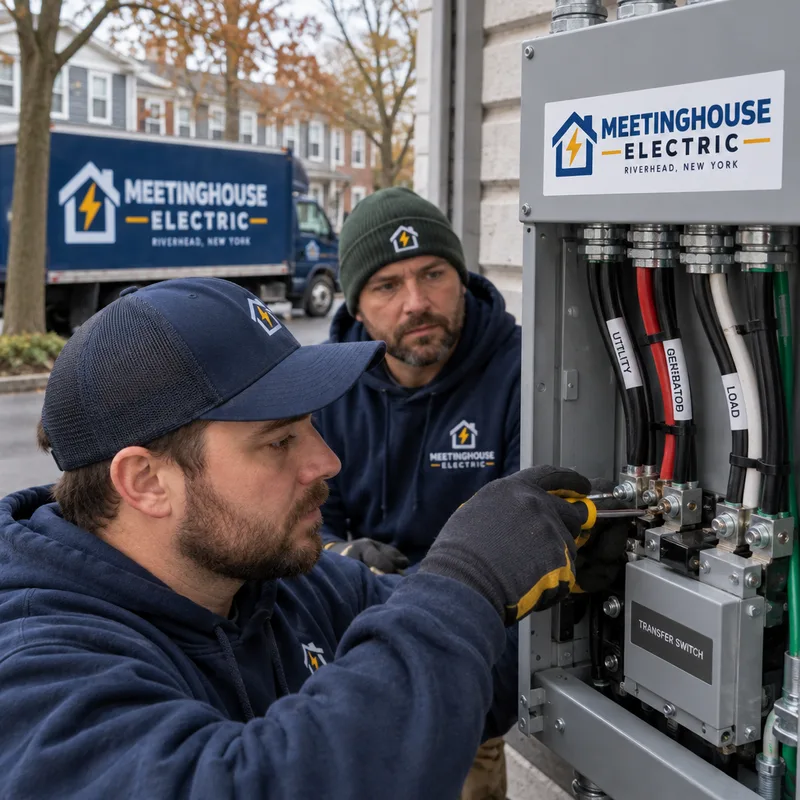
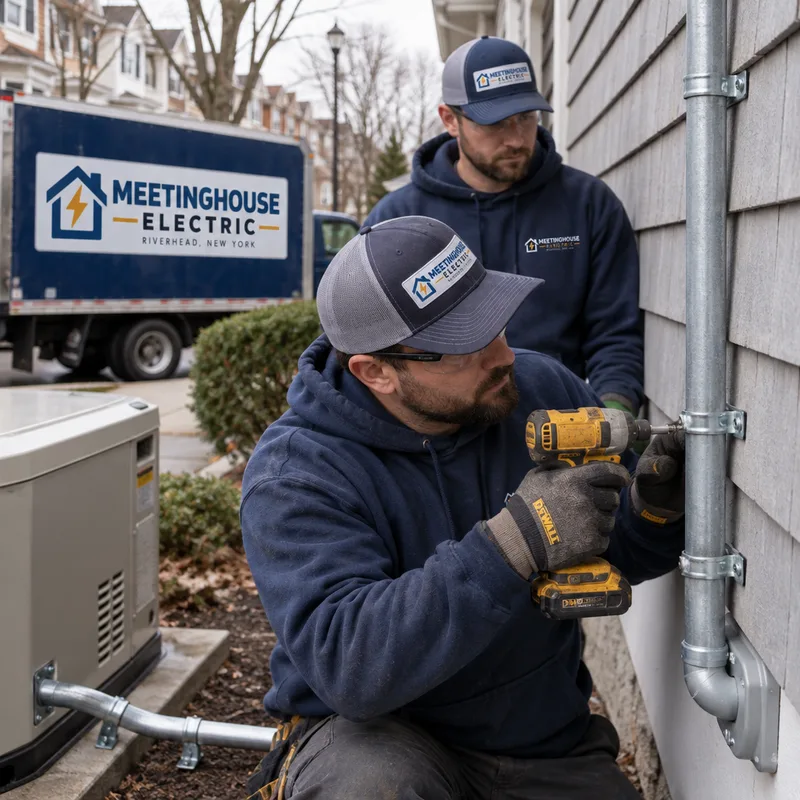
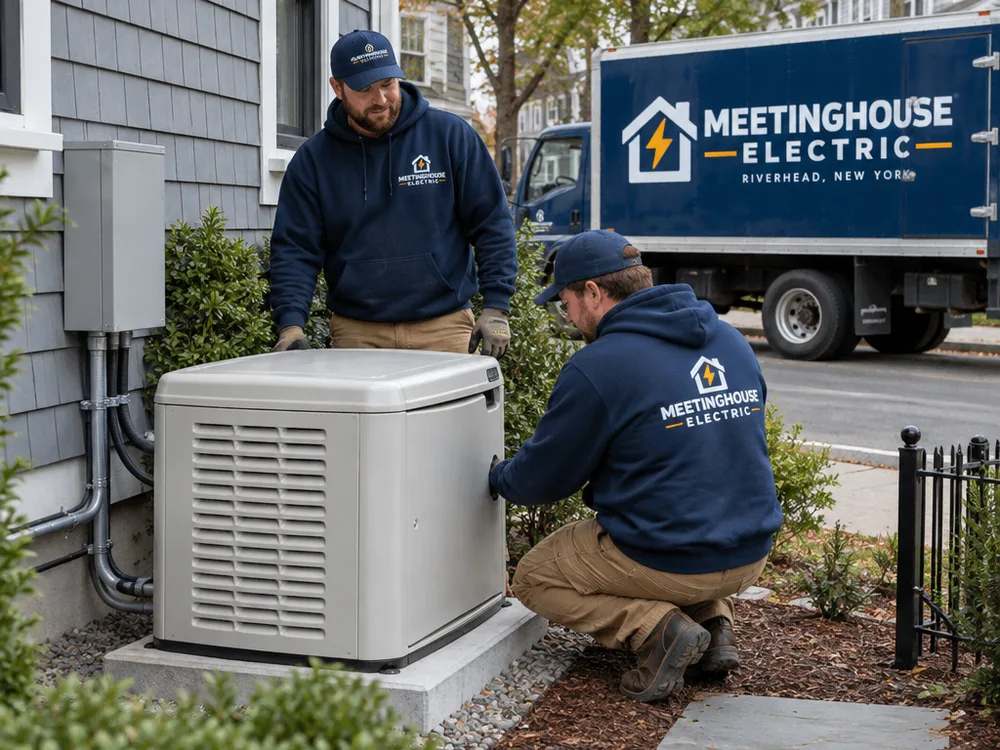
If you want backup power that matches how your home is actually used, start with an on-site assessment and a written scope that spells out placement, transfer switching, and what loads will be supported.
Call for a Free EstimatePractical questions
Yes, a standby generator setup normally uses an automatic transfer switch (ATS) so the home is safely isolated from the utility during an outage and the generator can start and transfer power on its own. The ATS is also what prevents dangerous backfeed, which is a key safety and code issue for Suffolk County generator installation.
Often, yes, but it depends on panel condition, available breaker space, and how the transfer equipment needs to tie in. During the Riverhead site visit we inspect the service equipment and determine whether the generator can be integrated as-is or whether panel work is needed for a safe, code-compliant connection.
We size a generator based on the loads you want to run and how they start, not only on square footage. Large motor loads and heating or cooling equipment can require extra capacity at startup, so we build a load plan that reflects your actual priorities (whole-home versus selected circuits).
Most electrical installation work is completed in 1 to 2 days once equipment, permits, and the site plan are ready, but total timeline depends on permitting steps and any upgrades needed to your existing electrical service. We'll give you a realistic schedule after the assessment so you can plan around inspections and any coordination with other trades.
The best location balances required clearances, service access, noise considerations, and an efficient wiring route back to the main panel and transfer switch. On many Riverhead properties, placement also comes down to how the home is laid out and where a clean exterior conduit route can be run without creating awkward penetrations or long, exposed runs.
Meetinghouse Electric is licensed under ME-59301 and carries General Liability insurance. If you want the license number on your paperwork and on permit documents, we provide it as part of the project scope.
Tell Meetinghouse Electric what you want powered during an outage and where you think the unit should go. We'll verify the electrical service, map the transfer-switch approach, and outline the steps to a code-compliant backup power install in Riverhead and across Suffolk County.